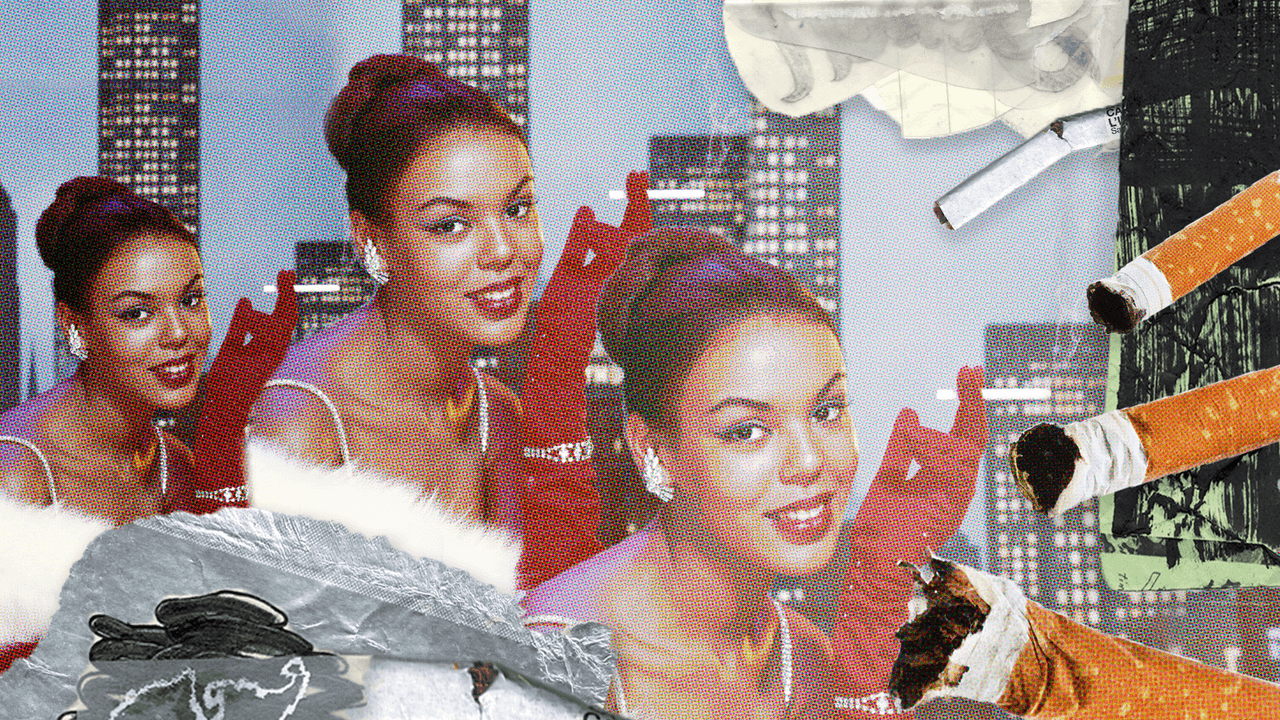
For me, smoking has always been linked to being gay.
My very first cigarette—a Belmont at age 19—was lit in order to talk to a boy I had a crush on at my call centre job, as smoke breaks were the only time we were alone.
My second (and third, fourth and fifth) took place in the “smoking pits” of gay bars and clubs—a communal space to talk, bitch and flirt, away from the loud music and sweaty heat.
Eventually I’d buy packs to have on hand at home, offering to guests at the queer pre’s I’d host, or to lovers craving one in the early morning. When vapes got popular, my smoking came inside and was suddenly much more flavourful—and frequent.
These are all things I confessed to my intake coordinator at Smoke Break, a newly launched national program by the Community-Based Research Centre—a non-profit promoting queer and trans health. I’d ended up there after a few friends and family commented on my vape use (one going so far as to say I “looked like a chimney”), so I was motivated to cut back.
Later, I heard my experiences were common.
“We’ve had a lot of people showing up to the program saying smoking is meshed with their queer identity, and that’s something I’ve noticed within my own queer circles a lot,” says Lonnes Leloup, one of Smoke Break’s peer support workers. The program begins with an online intake session, where participants outline their smoking habits, goals and potential obstacles. At the end of the intake, you’re connected with a peer support worker who can meet regularly with you over video chat to keep you accountable and to chat through setbacks.
Since the program’s October 2025 launch, Leloup and her peers have conducted more than 110 peer support sessions with queer, trans and Two-Spirit folks interested in reducing their consumption of what they called “commercial tobacco”—a distinction made to differentiate from ceremonial tobacco use in Indigenous communities.
“Letting people know that it’s possible, even if they aren’t sure that they want to quit altogether, can be a very beneficial change in lifestyle,” she says.
Most people understand that smoking is harmful—it’s linked, after all, to over two dozen diseases and conditions, including cancer. But the project’s LGBTQ2S+ focus stems from the fact that queer and trans people are much more likely to smoke than their straight and cis counterparts.
For instance, a third of queer and trans people aged 16 to 29 in Ontario and Quebec are active smokers—and two thirds have smoked before, found one 2023 study. Comparatively, smoking rates are 10.9 percent among all Canadians aged 15 or older, according to a 2022 study. These trends are consistent for Americans as well. More than 27 percent of “LGBTQ adults” in the U.S. consume some kind of tobacco, compared to 18 percent who identify as straight.
These numbers only compound when we parse specific members of our community. You’re more likely to smoke if you’re bisexual, for instance, with one 2012 study finding as many as 45 percent of bi people consuming tobacco regularly. The same disparities exist across gender and race, with one 2022 American study finding that more than half of all trans and gender-diverse people use some kind of tobacco product. Another 2020 American study noted that Black and Hispanic LGBTQ2S+ people, as well as queer cis women of all races, all have an even higher smoking risk than white queer men.
When thinking about these trends, it’s important not to assign blame when conducting a smoking “cessation” (aka, gradual ending) program, says Carlisle Kfoury, another Smoke Break peer support worker.
Many other smoking-cessation programs don’t function from a harm-reduction perspective, Kfoury says. “That can be scary and there’s a lot of shame. So in a big way, we wanted to emphasize with our program that there’s no shame at all.”
That intentionality was noticeable during my intake session, where I was reminded several times that my habits shouldn’t be a source of guilt. Instead, I was asked about my personal goals. For some people, Kfoury says, a goal could be switching to e-cigarettes or vaping, a somewhat less harmful version of “combustible” smoking. (That said, it’s worth noting that studies show that using e-cigarettes still results in poorer health outcomes than not vaping or smoking at all.) For others, it might be swapping to nicotine-replacement therapies such as nicotine lozenges, or trying out a FÜM—a nicotine-free flavoured air device—both of which are provided by Smoke Break free of charge.
The goal could also simply be for a participant to smoke less. “If instead of smoking twenty cigarettes in one day, suddenly [a client] is only smoking five cigarettes, that’s also an accomplishment in itself. That’s a win,” says Leloup.
But it’s a win that may not come easily, especially when there are dozens of what are called “upstream” factors, say Kfoury and Leloup. Factors that, as they impact our lives, drive queer and trans people to rely on nicotine as a stimulant to release dopamine. Things like bullying, ostracization, discrimination, stress and shame all contribute. There’s also the fact that queer and trans people are more likely to drink and take drugs than the general population—and research has shown that smoking and drinking have a strong cross-reinforcement effect. In other words, drinking can make smoking more enjoyable and act as a “cue,” making you instinctively grab a cigarette or vape whenever you’re having a drink, even if you’re trying to cut back.
To top it all off, tobacco companies are known to target queer and trans people directly.
“Tobacco companies have infiltrated groups and areas such as Pride, nightlife and gaming to reach LGBTQ consumers in ways and where they put themselves in the centre of our culture,” says Dr. Kendric Dartis, vice-president of outreach and engagement for the Truth Initiative, a U.S.-based group dedicated to preventing and ending nicotine addiction. “As early as the 1990s, tobacco industries and companies were aware of high smoking rates among the community and came to take advantage of this particular market.”
There are dozens of smoking advertising campaigns that deliberately use language to entice further use among LGBTQ2S+ consumers, such as Camel’s “Take Pride in Your Flavor” advert for flavoured vapes. “The ads might not even overtly say that it’s a nicotine product, but it shows a luxurious life of acceptance and resiliency,” says Dartis.
He says perhaps the most infamous example of predatory marketing is the R.J. Reynolds Tobacco Company’s Project SCUM. A condescending acronym for “subculture urban marketing,” SCUM was an internal marketing plan from the mid-’90s to aggressively target queer communities in San Francisco and get them to smoke even more than they already were. The documents became public in the anti-tobacco litigation that would follow in the years after. “It really shows you what they think of our communities.”
To combat such pressure, Truth Initiative launched the EX Program. Though it’s not queer and trans-specific like Smoke Break, Dartis says the Truth Initiative went to lengths to ensure the program was culturally competent to the issues and preferences of the community, going as far to create an internal Pride + Progress coalition to gather research and tailor supports for getting queer and trans people to quit smoking.
“It’s personalized plans, interactive text messages and access to a supportive online community,” says Dartis.
But programs like Smoke Break and EX might be becoming even harder to come by, especially in the U.S.
“Everybody is worried that if they do anything that’s inclusive of the queer population, then they will risk getting their funding terminated,” says Scout, executive director of the LGBTQIA+ Cancer Network. Scout, who previously ran a project on tobacco control funded by the U.S. Centers for Disease Control and Prevention (CDC) before his time at the Network, has seen how the current chill on diversity and equity spending is hurting our ability to learn more about and prevent nicotine addiction in our communities. At the same time, he’s been watching the current Trump administration do away with nicotine oversight, letting go of nicotine-related roles at the CDC and the Food and Drug Administration.
Nicotine companies are taking advantage of this opening and putting their full weight behind vaping, increasingly marketing flavoured vapes that can appeal to younger consumers.
Scout and the LGBTQIA+ Cancer Network are working to educate others about the potential harms of tobacco and nicotine, and similar movements are rising in Canada. In kind, nicotine companies are enlisting the help of LGBTQ2S+ and other minority groups to argue that vaping (including flavoured fare) is a form of harm reduction, helping people get off combustible cigarettes.
Scout, like all the folks working in smoking cessation or harm reduction, emphasizes that quitting or cutting back isn’t about finger-wagging or going cold turkey. There are so many factors that weigh into our desire to start and continue taking nicotine, and it’s incredibly hard to shake established patterns. Instead, they encourage queer and trans people to think about the positive goals they have for their life, which quitting or cutting down on smoking can help them to reach—like becoming healthier, healing more easily from trans-affirming care, or simply redirecting time, energy and money to more rewarding things.
I can attest that, for me, nothing shuts down a conversation more than shame—even if it’s well-meaning. I need to know I can tell you about any setbacks or failures without judgment. Otherwise, I’ll hide the truth. Call it cowardice or patterns of behaviour, but safety and acceptance are more important to me than quitting smoking.
Fortunately, my peer support worker at Smoke Break understands all of this—and is equally hesitant about a cold turkey approach to quitting. Understanding and accepting relapses is part of the journey, and after talking about my anxious fidgeting in social settings (where I’m most likely to vape), they ordered me a FÜM—which I’m excited to receive and try as a substitute.
In the meantime, I may not have shaken vaping, but when I pull that vibrant little device out of my pocket, I now understand it—and me—better, and in the context of all the queers who lit up before.