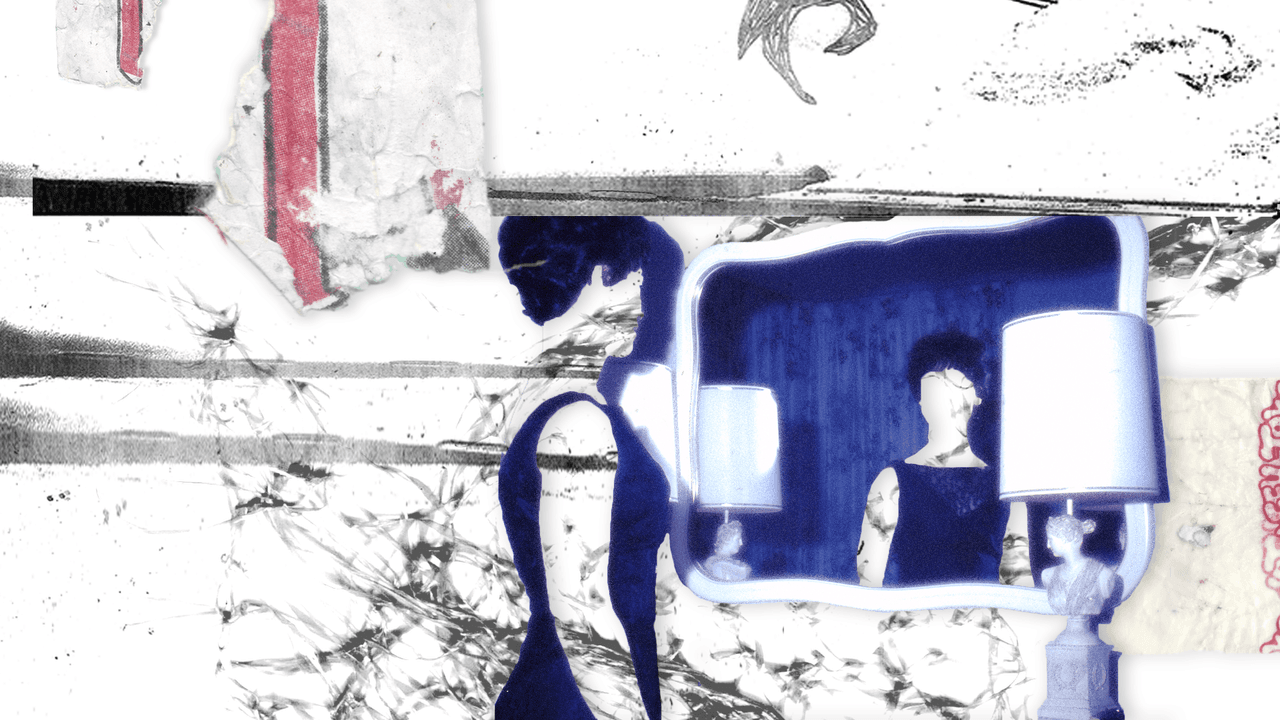
Almost a decade ago, when I was working in queer community health services, a trans woman elder told me that she was afraid to be seen walking by the local elementary school. “Nobody wants to see me there,” she said. “No one wants to see someone like me around kids.” I still remember the way she said it. How her voice got quieter, how her eyes glistened. I think I will remember it forever.
The spectre of the sexual predator has haunted trans communities since the sex panics of the mid-to-late twentieth century. Mainstream films such as The Silence of the Lambs and The Crying Game have enshrined the image of sexually deceitful trans women and violently depraved, cross-dressing serial killers in pop-culture consciousness for decades. Today, anti-trans sentiment and anti-trans legislation continue to surge around the globe, largely hinging around the notion that trans people—and particularly trans women—are sexually dangerous.
In December 2021, infamous anti-trans rights figure and Harry Potter author J. K. Rowling made a post on the social media site X asserting that, “War is Peace. Freedom is Slavery. Ignorance is Strength. The Penised Individual Who Raped You Is a Woman.” Written in reference to the fact that some individuals charged with rape identify as trans women, the post appears to mock trans identities while dismissing the possibility that “real” women are capable of perpetrating sexual assault. These sentiments have been repeated by others over and over again.
That trans people also experience sexual violence seems not to figure into Rowling’s post at all. This is one of the foundational premises of a transphobic social system: trans people are to be perceived always as violent and never as victims, always as dangerous and never as vulnerable, always as predators and never as people. The result is that the trans victim or survivor does not really exist in the imagination of the dominant culture—in the eyes of the world, we are monsters, and a monster cannot be raped.
Yet social science research tells a very different story. Since the 2010s, when large cohort studies of trans life experiences became more common, the consensus has been that trans people are significantly more likely than cis people to experience sexual assault in our lifetimes. Multiple studies show that almost 50 percent or more of all trans adults report being survivors of some form of sexual violence. Sadly, similar statistics have been found among trans youth. Trans people are also four times more likely than cis people to experience violent crime, including rape. Racialized trans people, particularly those who are Black, Latinx and Indigenous, are even more likely to be subjected to sexual violence than their white peers according to the 2015 U.S. Transgender Survey.
The dissonance between mainstream attitudes towards trans survivors and the prevalence of survivorhood among trans people leaves a disturbing gap in the social fabric in which trans people live our lives—a memory hole in the collective consciousness. If so many of us have been sexually assaulted, where do all our stories go?
Rejected by the zeitgeist, unrecognized by a political system that is even now working towards banning trans people from public life, the collective trans experience of sexual assault reminds me of the Zen koan: If a tree falls in the forest and no one is around to hear it, does it make a sound? If a trans person is sexually assaulted in a culture that reviles trans people, what does “healing” or “justice” even mean?
The Me Too movement of the 2010s, like the feminist movements that preceded it, placed heavy emphasis on believing women as the antidote to sexual violence. Yet as many trans writers and thinkers have pointed out over the past decade, for trans survivors, the struggle goes deeper. The problem lies not only in being disbelieved, but also in society’s refusal to understand that trans survivors are just as profoundly affected by sexual violence as cis survivors. Furthermore, dominant cultural norms do not allow society to recognize that sexual violence is often perpetrated against trans people not only by cis men, but also by cis women.
In a 2018 article for them magazine about Me Too and trans people, non-binary writer KC Clements, who notes that they were assigned female at birth, argues that “too many still believe that [sexual harm] is only experienced by conventionally attractive cisgender women, or that is only perpetrated by ‘bad’ cisgender men.” In the same piece, Clements recounts a story in which a cis woman non-consensually gropes them at a bar, writing that “My gender, my body and my selfhood had been ... broken down into an object … I left the bar with a deep sense of shame, as though what had happened was somehow my fault.”
A disturbingly similar sentiment appears eight years later in a 2026 Substack essay by the popular trans woman writer pen-named Auto_Anon. “If you are a cis woman in a relationship with a trans woman, you are far more likely to harm her than she is to harm you. However, you are far less likely to be believed than she is,” writes Anon, going on to bluntly assert, “Cis women rape. And, cis women rape other women.”
In other words, a part of the cultural silence enveloping the reality of trans survivors is the fact that their stories do not fit pre-existing cultural expectations of what sexual violence is, what it looks like, who perpetrates and who experiences it. As a result, trans survivors’ voices go unheard, locked out of the conversation about sexual violence and its origins.
This can have a serious and devastating effect on the landscape of health care and social supports for trans survivors—both transmasculine and transfeminine individuals experience significant barriers to accessing supportive services in the wake of sexual assault, including the risk of being misgendered, not being believed by medical and mental health professionals and encountering transphobic discrimination as a part of the process.
Given all of the above, it might be tempting to fall into despair about the cultural landscape that trans survivors face. Yet I believe the answer lies, as it so frequently does, within the community itself: in the long tradition of trans survival, the key has always been collective action, imperfect though it may be. Trans-created survivor resources such as the Trans Lifeline and trans-led survivor advocacy groups such as FORGE, which maintains the Trans Survivors website, are examples of by-and-for trans community initiatives, which are becoming ever more important given the political moment we currently face.
It is trans people ourselves who hold the knowledge, perspective and empathy to create both the networks of care and the cultural memory needed to hold the stories of sexual assault and violence that haunt our past and present. As Jackson W. Schultz, a peer facilitator of support groups for transmasculine people writes:
“If there is a meaning to be made of my own experiences of sexual violence, perhaps it is this: I cannot undo what t(he)y did to me, but I can be grateful for the hundreds of other transmasculine survivors I have had the opportunity to share and build with over the years. In spite of the violence, we have endured, or perhaps because of it, our resilience abounds.”
I believe our resilience will abound—that the combined brilliance and determination of trans survivors and trans community will find a way to commemorate what happened to us, to hold and heal those who survived and to honour the memory of those who didn’t. We will endure. We’ll help each other. We’ll do it for the elders who came before us, who lived in fear. We’ll do it for the ones coming next, so they don’t have to.