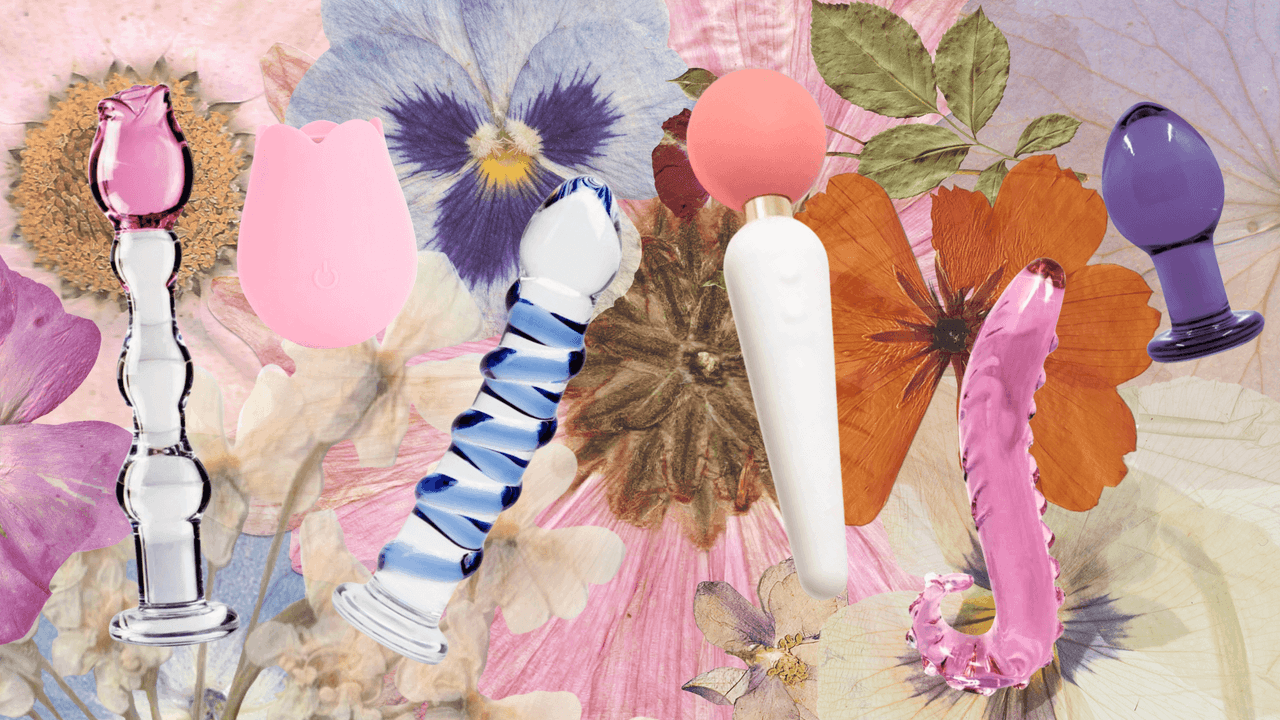
Visit the website of your average mainstream sex toy retailer—from Pink Cherry to Adam &Eve—and you’ll be hit with three options to explore: toys for men, toys for women and toys for couples. Look deeper, and you’ll discover a whole lot of cis and heteronormativity: strokers marketed only for men, dildos for women and couples’ sex toys that only cater to cis, straight pairings. Despite advertising copy that frequently implies sex toy companies value open-mindedness and boundary pushing, many mainstream providers remain rigidly normative.
Thankfully, independent sex toy creators have begun to step in to address this gap, providing gender-expansive toys, or working to broaden consumers’ understanding of who exactly different items are “for.”
Step Tranovich is one of them. About a decade ago, they began to notice that sex toy retailers weren’t inclusive of people like themselves, their friends or their partner. In response, the Bay Area creator founded Cute Little Fuckers in 2018. What started as a Kickstarter campaign turned into an award-winning sex toy company that champions accessibility and inclusivity by offering what Tranovich describes as “gender abundant” toys.
Online, none of the Cute Little Fuckers toys are categorized according to the gender of a potential user. Instead, each toy is given a name and a suggested guide for how it can be used. Many of the toys are also given their own pronouns—not to dictate who might like them, but in order to personify the toys and to reflect an expansive view of gender. For instance, Princette is referred to with they/them pronouns and is advertised as a mini, universal vibrator. “By having our toys have their own names and pronouns, it’s giving visibility and affirmation to people of different identities,” Tranovich explains.
North of the border, Venus Envy, a Halifax-based sex shop and bookstore founded in 1998, is doing similar work to make the sex toy industry more inclusive. At the brick-and-mortar store, toys are sold by function—dildos, strokers and suction, for example—rather than gendered category. Other categories are focused on actions, such as “humping” and “butt stuff.” Venus Envy also offers educational books about topics such as sexual wellness and neurodiversity—as well as events and workshops. “We operate from the understanding that most people did not get any sex education, or if they did, it wasn’t very good, or it wasn’t very comprehensive, or just didn’t meet their needs,” says Rachele Manett, an education coordinator at the shop.
Manett believes that removing the gendered categorizations of sex toys can help customers make better-informed decisions on what they spend their time and money on. Instead of having assumptions about their anatomy or desires imposed on them, consumers can talk to staff in an accepting space to better understand their own needs.